Asian Hawk-eye: Jackie Chan cut these film errors out of ARMOUR OF GOD
Sometimes you spot things in films and series that don’t belong there. Whether it’s the Starbucks cup in GAME OF THRONES, a forgotten cardboard display in THREE MEN AND A BABY, or microphones that accidentally slipped into the frame in numerous films. However, Jackie Chan’s ARMOUR OF GOD (1986) takes the cake in the category of best film bloopers.
In my previous article, “The deleted scenes from Jackie Chan’s ARMOUR OF GOD (1986)“, I pointed out one of the biggest problems during filming: Jackie’s fatal accident. This had many consequences, including:
- Several months break in filming
- Rewriting of the original script and shooting schedule
- Continuity errors due to Jackie’s hairstyle
- Jackie has to step in as director
- A different image format
- Foreign shoots with lots of tricks and gimmicks
When ARMOUR OF GOD was officially announced by Eric Tsang in March 1985 as his next film as director, it was clear that he would shoot it in his favourite format, Widescreen (1.85:1). At that point, Jackie Chan was not yet part of the project, at least not officially. When he was then cast as the lead actor and had his serious accident on set in Yugoslavia, director Eric Tsang had to pull out after several months of waiting due to his busy schedule.
Now Jackie Chan was faced with a challenge that forms the basis of this article: Jackie’s favourite format was CinemaScope (2.35:1), see for example POLICE STORY (1985). In CinemaScope, everything has to fit, whereas in Widescreen format there is still some leeway at the top and bottom. What no one could see in the cinema version at the time due to masking on the projector became clear in the 4:3 format (1.33:1) on home televisions, because ARMOUR OF GOD was to be shown in full screen without “distracting” black bars at the top and bottom (“open matte”).
To clarify one thing in advance, this is not an attempt to assign blame to anyone on the film crew, especially not to assistant director Fanny Leung Man-Yee (梁曼儀), who, according to the credits, also worked as continuity supervisor on set – aan ungrateful task, especially for the problematic production of ARMOUR OF GOD. Film is teamwork, as the photos clearly show.
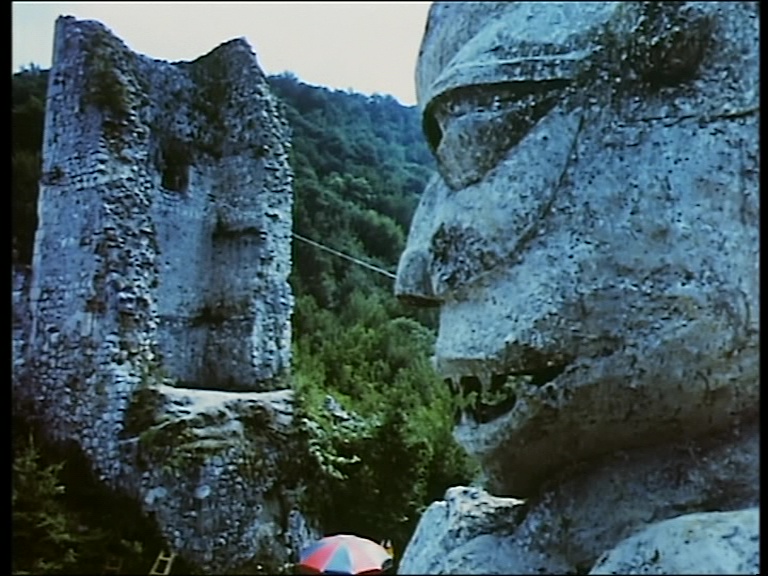
↑ In the opening sequence, Asian Hawk, alias Jackie, manages to steal the Sword of the Armour of God from an African tribe, but apparently not without a stepladder and a prior rest under his parasol. Of course, this is equipment for the film crew to get everything in position.
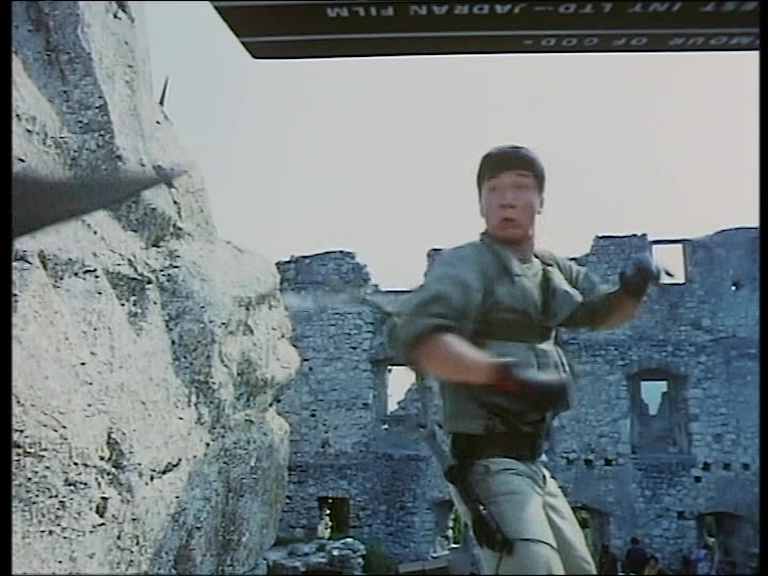
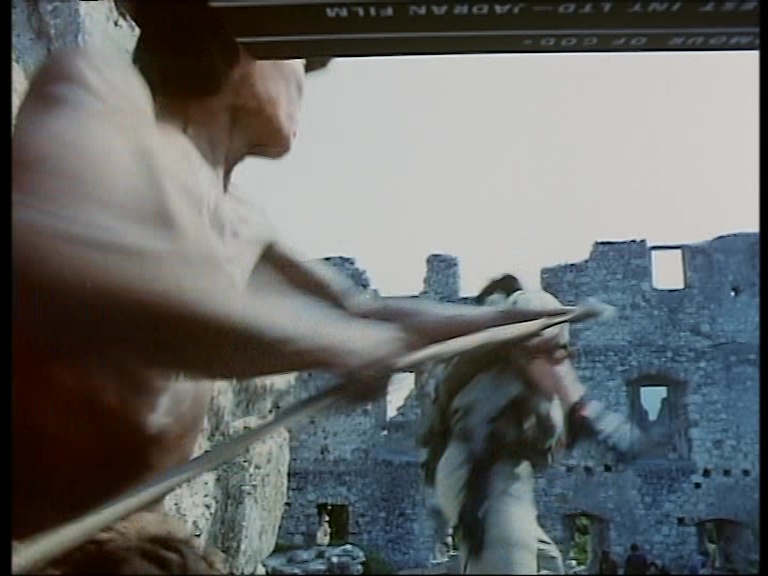
↑ Jackie usually takes his time when filming his fight scenes. But here, it seems he couldn’t get it done fast enough. Why else would you still be able to see the clapperboard being pulled away from the shot while Jackie is already in action? The curious extras – or are they crew members? – in the background can only be seen in the 4:3 version of the film.
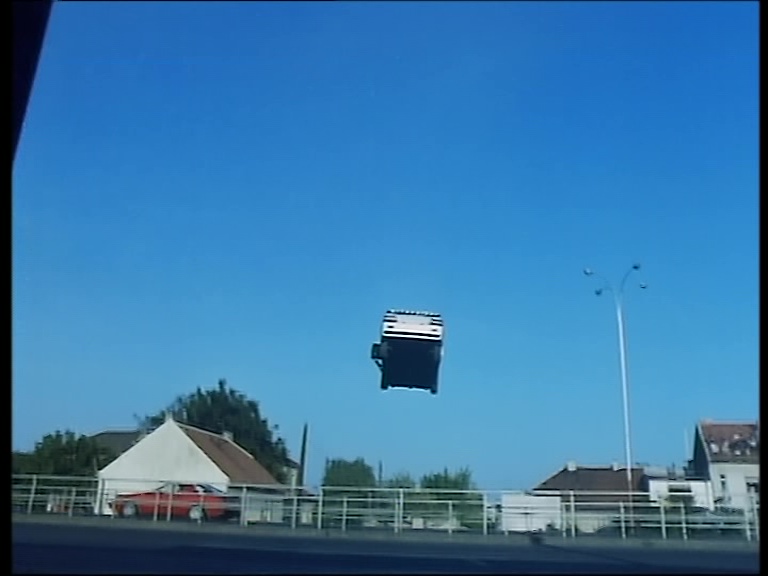
↑ From today’s perspective, it seems almost ridiculous, but in 1986 you had to be skilled with your hands to mount a heavy 35 mm film camera as an action cam on a car that flies over two bridges into a pile of cardboard boxes. Whether the camera survived is questionable. The film footage did, and it’s fantastic. As a child, when I watched the film on a CRT monitor, I thought that the left rear wheel had come loose.
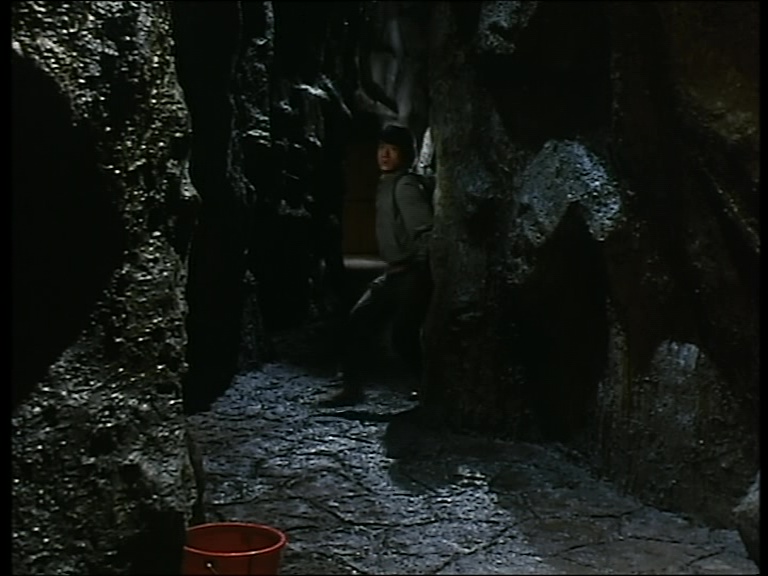
↑ Caves are damp, and when they are inhabited by evil drug-addicted monks, the constant dripping may also make the passageway dangerously slippery for them in their robes. Otherwise, I cannot logically explain the red bucket here within the story. However, the red colour makes it look so out of place that one cannot help but think that it belongs behind the scenes.
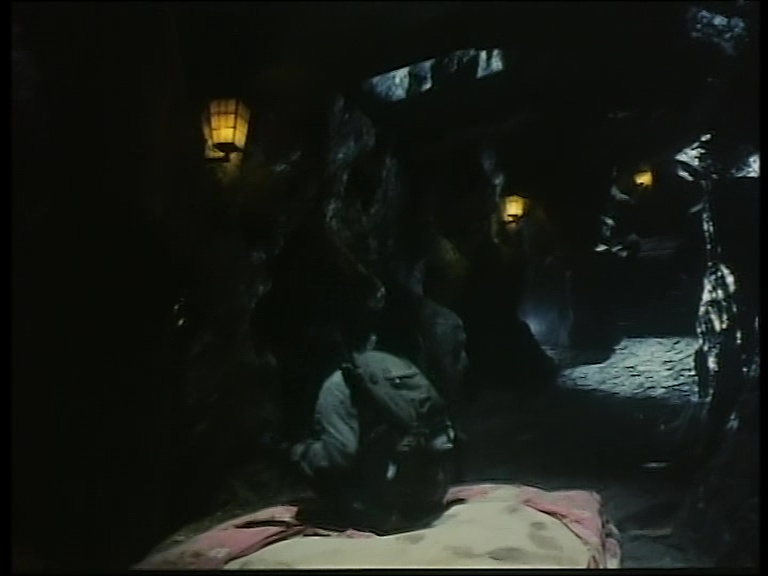
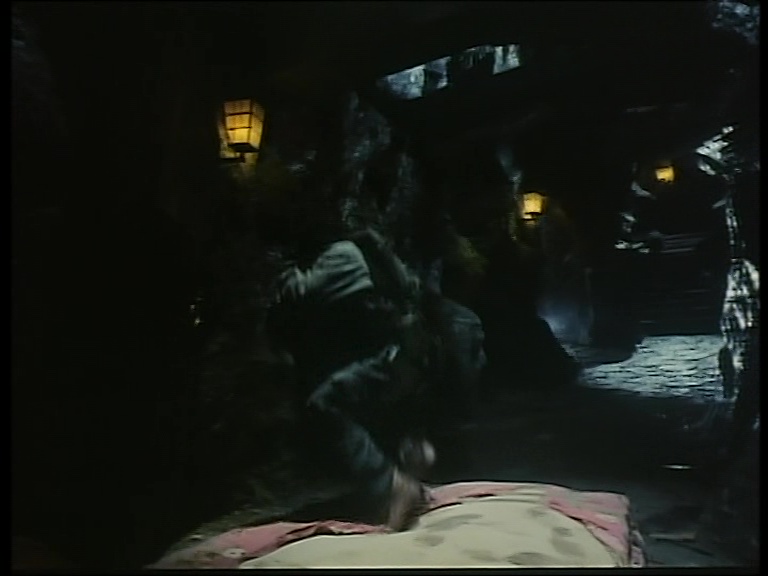
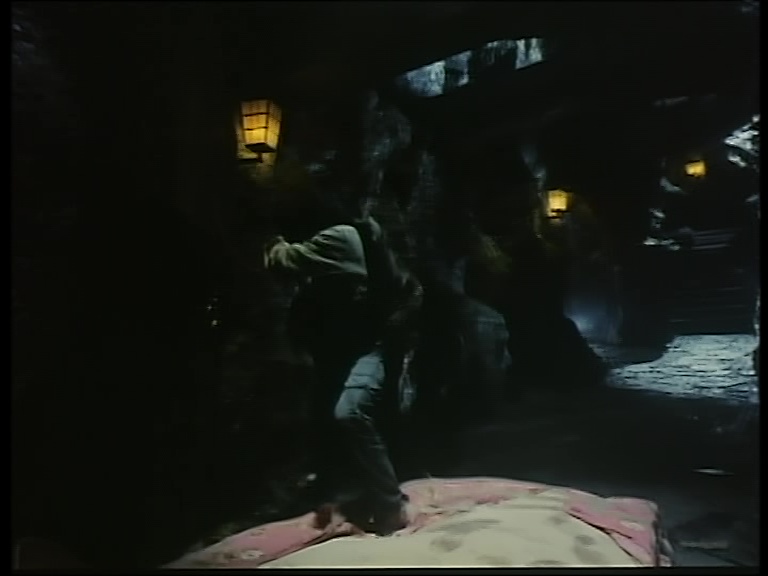
↑ Just like this mattress. When you first saw this film version, did you also wonder why there was a mattress in front of Alan and Laura’s prison cave? I often tried to explain it to myself with the drug aspect – a junkie’s sleeping place. But that would be really far-fetched. How practical for Jackie’s knee, though. This stunt prop, used to cushion Jackie’s jump, was definitely not supposed to be seen in the film, and it isn’t in the cinema version.
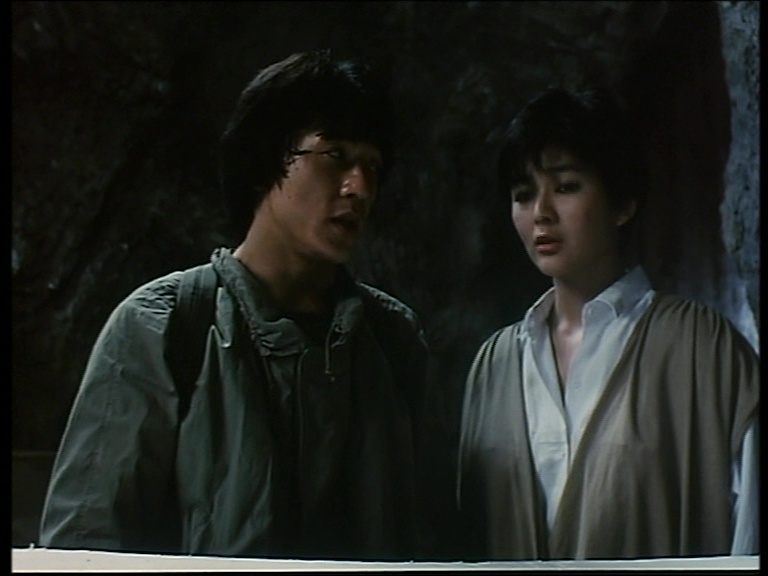
↑ During Jackie’s dialogue with Alan, we notice something white dangling in front of the camera. Perhaps it is a box for dimming the light. In any case, it is noticeable.
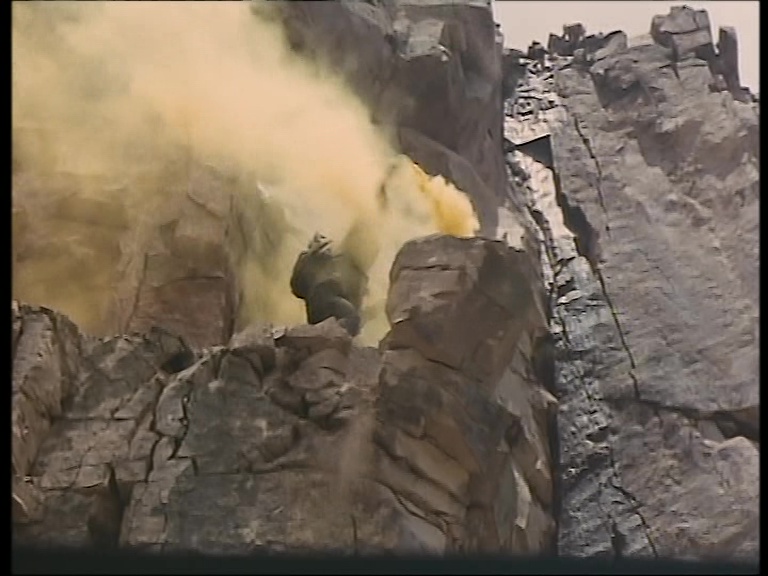
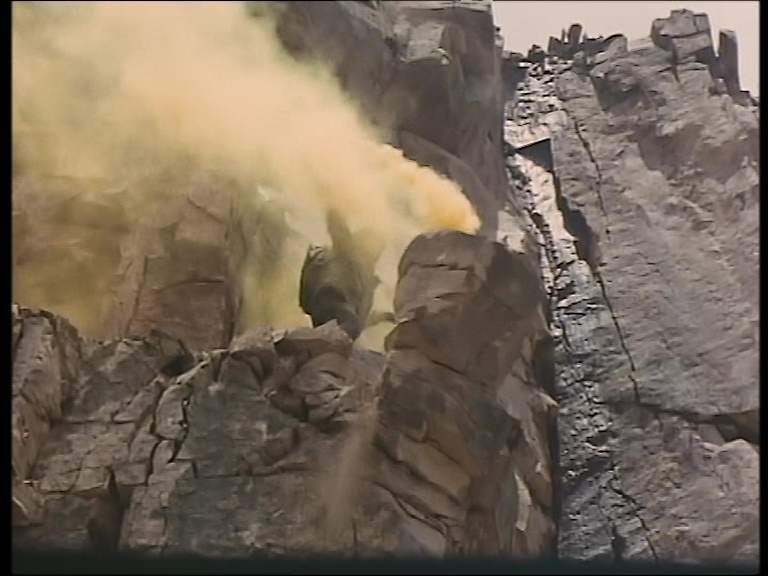
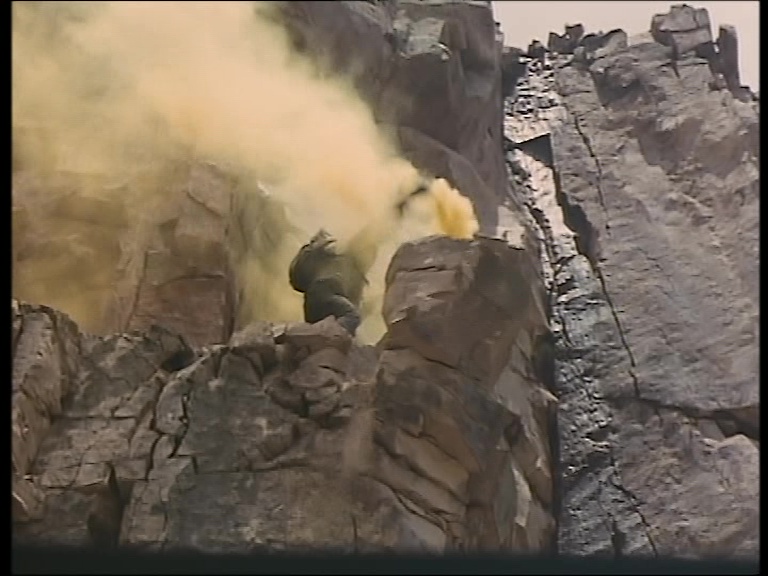
↑ Less noticeable, however, are the stones thrown down at the top right edge of the screen in the final scene. Two crew members wait for their cue to theatrically push the pieces of cardboard past Jackie Chan. One of them is clearly visible with both hands, arms and head.
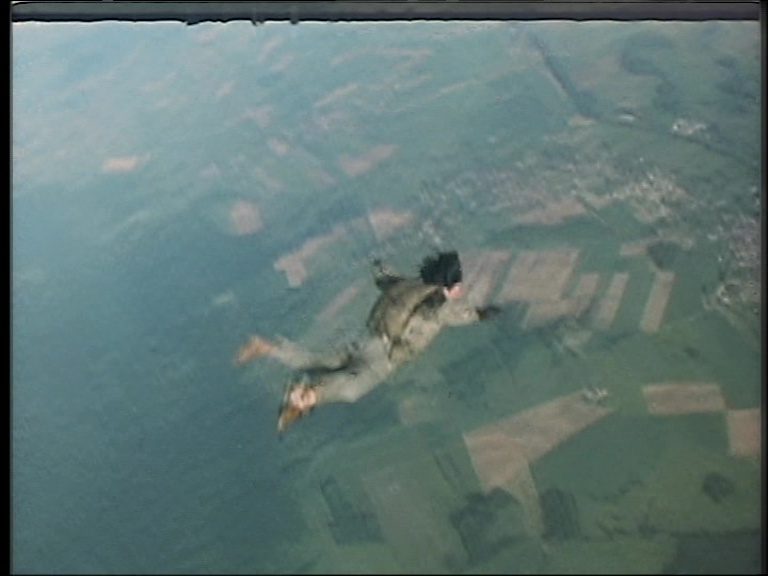
↑ During the parachute jump, we can see the upper camera aperture, which is completely understandable in this case, as it is a real parachute jump in which the cameraman may have had to operate the 35 mm film camera half-blind – and in any case without a control monitor.
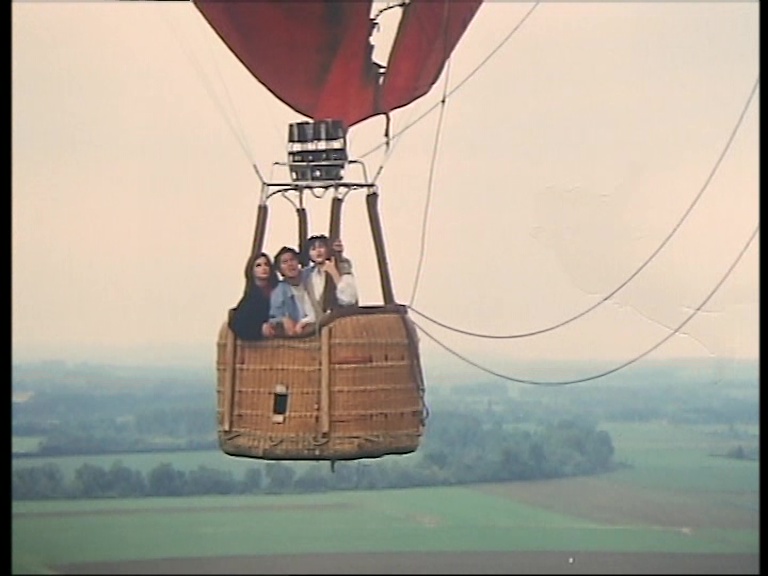
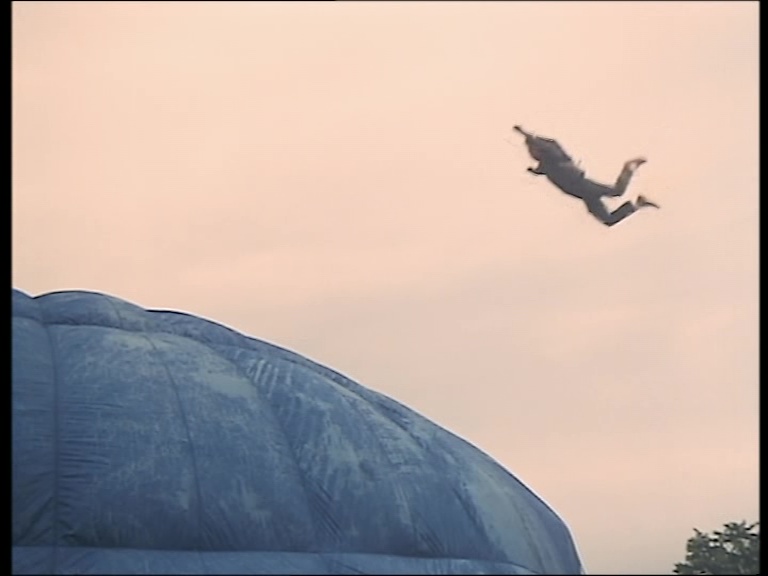
↑ Well, Jackie’s final jump onto the balloon did not take place at high altitude, but on the ground outside Paris at Auxerre Airport. In the cinema version, the trees in the background and the proximity to the ground are not visible.
The “Open Matte” / 4:3 version (1.33:1) of the film made its way to England via VPD and to Germany via New Vision, Polygram and Arcade. The English VHS cover is absolutely top-notch, as is the artwork by Polygram, but unfortunately the film versions contained therein are too dark. Nevertheless, this 4:3 version made it onto disc in the DVD era, including in Germany in the Masterpiece Edition. Since then, we have only been able to obtain the masked Widescreen cinema version (1.85:1) worldwide.
This is certainly better for the film experience, but I would find it consistent and fair for the nerds among us fans if labels were to include the full “open matte” footage of the 1.85:1 version as a bonus on their releases in future – preferably remastered so that the dark scenes can also be enjoyed.


[…] that break through the wall here, but almost everything else, please feel free to read “Asian Hawk-eye: Jackie Chan cut these film errors out of ARMOUR OF GOD“ as a […]